Review: Charleston Palm Tree Badge Sticker for Embroidery
As a designer who has spent countless hours digitizing and stitching everything from delicate baby onesies to heavy-duty workwear, I approach every new machine embroidery design with a mix of curiosity and caution. We have all been there: you download a file that looks stunning on the screen, only to find it puckers the fabric or loses its charm once the needle hits the cloth. That is why I took a close look at the Charleston Palm Tree Badge Sticker before committing it to a client project. This isn’t just about aesthetics; it is about how a design performs in the real world of handmade production.
First Impressions: Vintage Charm Meets Structural Clarity
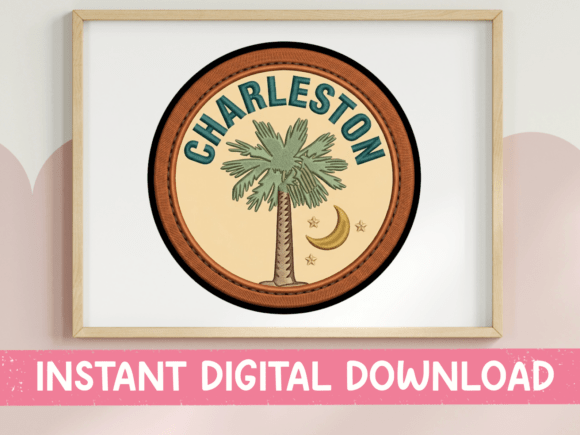
The first thing that strikes you about the Charleston Palm Tree Badge Sticker is its cohesive visual narrative. It captures that specific, nostalgic mood associated with the Lowcountry—warm, historic, and effortlessly cool. The layout is classic: a tall Sabal palm centered within a round, leather-edged badge, flanked by a golden crescent moon and small stars. For an embroidery designer, this composition is promising because it relies on strong, recognizable shapes rather than overly complex gradients that machines struggle to replicate.
The "sticker" or "patch" aesthetic is particularly trendy right now. It suggests a self-contained unit that can be applied to various surfaces without needing to blend seamlessly into the background fabric. This makes it versatile for both custom apparel and home decor. The vintage style implies a slightly worn or textured look, which is forgiving in embroidery. If your tension is slightly off or the fabric has a bit of texture, the design’s inherent character can absorb those minor imperfections better than a ultra-modern, crisp geometric logo might.
Real-World Application: From Tote Bags to Sweatshirts
To truly evaluate this embroidery file, I imagined it in several common scenarios for my small shop. The most immediate application that came to mind was a canvas tote bag design. Canvas is sturdy, holds stitches well, and provides a neutral backdrop that allows the golden crescent and green palm fronds to pop. The circular badge shape works beautifully here, acting as a focal point on the front pocket or center panel. It transforms a generic bag into a piece of regional pride, perfect for tourists or locals alike.
I also considered this for sweatshirt embroidery. A heather grey or navy crewneck would provide excellent contrast for the lighter elements of the design. Here, the "leather-edged" look of the badge border needs careful attention. In digitizing terms, this likely requires a dense satin stitch or a specialized column stitch to mimic the raised, textured look of leather. If executed well, it adds a tactile dimension that customers love to touch. However, on a fleece or thick cotton blend, you must ensure the underlay is sufficient to prevent the design from sinking into the nap of the fabric.
For those selling T-Shirt Designs and Graphics, this motif translates well to embroidered tees, provided the shirt weight is substantial enough. A flimsy single-jersey tee might pucker under the weight of a dense badge design. In such cases, considering an applique design version—if available—or reducing the stitch density while maintaining the outline integrity could be necessary adjustments.
Technical Considerations and Stitching Performance
When working with a design like the Charleston Palm Tree Badge Sticker, technical execution is paramount. The palm fronds are the most critical element. They require precise fill stitch direction changes to create the natural fan shape of the Sabal palm. If the digitizing is poor, these fronds can look blocky or lose their definition. I recommend running a test stitch-out on scrap fabric identical to your final product. Pay close attention to the tips of the fronds and the points of the stars. Are they sharp? Or do they bunch up?
The crescent moon and stars, described as golden, will rely heavily on your choice of thread colors. A metallic gold thread can be tricky; it is often more brittle and prone to breaking. If you are producing in bulk for an Etsy seller inventory or a craft fair, you might opt for a high-sheen rayon or polyester gold instead for durability. Test the contrast against your background fabric. On dark fabrics, ensure the palm green is light enough to stand out. On light fabrics, check that the badge border provides enough definition to separate the design from the cloth.
Hoop size is another practical constraint. Since this is a badge-style design, it likely fits within a standard 4x4 or 5x7 hoop. However, always verify the actual dimensions in your software before loading it onto the machine. If you are placing this on a curved surface like a cap, you need to ensure the design isn’t too wide for the cap’s front panel curvature. A design that is too wide will distort when stitched on a curved brim.
Navigating Fabric Challenges and Stabilization
No matter how beautiful the digital preview, the fabric texture dictates the final outcome. For textured fabrics like linen or toweling, a cut-away stabilizer is non-negotiable. The Charleston Palm Tree Badge Sticker has a contained shape, but the density of the badge border and the palm fill can pull on lightweight fabrics. If you are creating a personalized gift like a kitchen towel or a baby item, use a soft, tear-away stabilizer for comfort, but consider adding a lightweight fusible interfacing to the back of the stitch area to prevent distortion after washing.
Be cautious with stretchy fabrics. While this design could work on a polo shirt, the rigid circular shape of the badge may restrict the fabric's natural stretch if the stitch density is too high. Always test wash your sample. Does the design hold up? Do the threads shrink or fray? These are the details that determine whether your finished product looks professional or amateur.
Commercial Viability and Brand Consistency
For commercial embroidery and small business owners, consistency is key. The Charleston Palm Tree Badge Sticker offers a strong brandable asset. It evokes a sense of place and tradition, which resonates with buyers looking for authentic, local-themed merchandise. Whether you are selling digital embroidery file packages or physical embroidered patch items, this design has high giftability. It fits perfectly into categories like holiday embroidery for summer vacations, wedding gifts for Charleston destinations, or nursery decor for southern families.
However, before listing this as a small shop product, confirm the licensing terms. Can you sell finished items? Can you include it in a bundle of design assets? Never assume. Also, consider creating printable mockup images that show the design on various products. This helps customers visualize the scale and texture, increasing buyer engagement and trust.
Final Verdict for Designers and Makers
The Charleston Palm Tree Badge Sticker is a strong contender for any designer’s library, provided it is handled with technical care. Its strength lies in its clear, iconic imagery and versatile vintage aesthetic. It performs best on stable, medium-to-heavy weight fabrics where the stitch definition can shine. By paying attention to thread choice, stabilizer selection, and stitch density, you can elevate this from a simple graphic to a high-value handmade product. Whether you are decorating a cap, a tote, or a sweatshirt, this design offers the kind of timeless appeal that keeps customers coming back. Just remember: test first, stitch second, and sell with confidence.