Reviewing the Escape Artist Book Door Sticker for Embroidery
As a designer who has spent years digitizing and stitching thousands of patterns, I have learned that not every graphic translates well to thread. Some designs look stunning on a screen but turn into a tangled mess under the needle. When I first pulled up the Escape Artist Book Door Sticker, my initial reaction was cautious optimism. The concept is charming—a visual metaphor for readers who vanish into their stories—but the execution in embroidery requires a keen eye for detail. This is not just a pretty picture; it is a test of how well bold, flat graphics can survive the texture of fabric.
First Impressions: Mood and Visual Personality
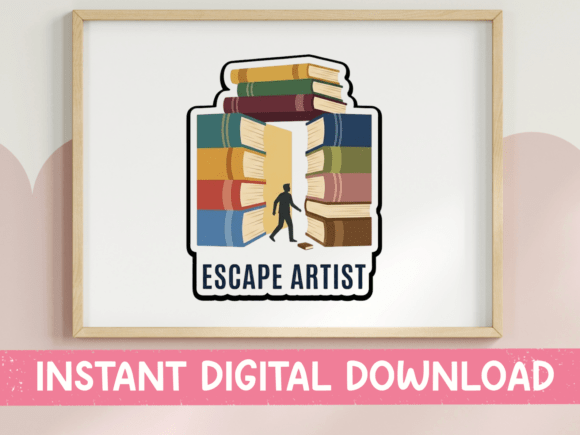
The design features a row of colorful stacked book spines in teal, red, orange, and cream, with one open book forming a door-like shape. It is playful, literary, and instantly recognizable to book lovers. For an embroidery project, this aesthetic leans heavily into the "cozy" and "intellectual" vibe. It does not scream for attention with complex shading or photorealistic details. Instead, it relies on strong color blocking and clean lines. This is a significant advantage for machine embroidery, which thrives on solid shapes rather than gradients.
The mood is inviting. It suggests a quiet afternoon with a good novel, making it an ideal candidate for personalized gifts or boutique merchandise. However, the "sticker-style" description implies a flat, two-dimensional look. In embroidery, we must ensure this flatness does not result in a stiff, cardboard-like feel on the finished product. The balance between visual appeal and tactile comfort is where the real design judgment comes into play.
Real-World Application: From Screen to Stitch
To truly evaluate the Escape Artist Book Door Sticker, I imagined applying it to a real-life scenario. Picture a canvas tote bag for a local independent bookstore or a literary festival. Tote bags are sturdy, providing a stable surface for the stitch density required by the book spines. The teal and red threads would pop against natural cotton, creating a vibrant tote bag design that stands out in a crowd.
Another strong contender is sweatshirt embroidery. A crewneck sweatshirt in heather grey or navy would provide a neutral backdrop for the bright book spines. Here, the design acts as a chest emblem, small enough to be subtle but large enough to be read. For custom apparel, this works well because the shapes are geometric. Geometric shapes tend to stitch out cleaner than organic, flowing lines, reducing the risk of puckering if the stabilizer is chosen correctly.
I also considered this for an embroidered patch. Patches are trending, and this design’s self-contained border makes it perfect for iron-on or sew-on applications. A patch allows the customer to move the design between jackets, bags, and hats, increasing the versatility of the finished product. For Etsy sellers and small shop product creators, offering this as a patch could reduce the risk of ruining expensive garments during the stitching process.
Navigating Technical Challenges
While the design is appealing, there are areas where caution is necessary. The description mentions "bold sticker-style," which often means solid fills. In embroidery, large areas of fill stitch can create stiffness. If you are stitching this on a thin fabric, such as a lightweight t-shirt or a silk blouse, the weight of the thread may cause the fabric to pucker or drag. In these cases, using a cut-away stabilizer is non-negotiable. For stretchy fabrics, a hoop-less technique or a specialized stabilizer might be needed to maintain the garment's integrity.
The tiny details are another concern. Book spines often imply text or small decorative elements. If the Escape Artist Book Door Sticker includes miniature lettering on the spines, these may not stitch out clearly at smaller sizes. Thread has thickness; it cannot replicate the precision of a printed font below a certain point. I recommend checking the stitch density and zooming in on the preview. If the text becomes a blob of thread, consider simplifying the design or increasing the overall size for larger items like pillow covers or blankets.
Curved surfaces, such as caps, present another challenge. The flat, rectangular nature of the books might distort if stitched on a highly curved front panel of a baseball cap. It is better suited for the side panels or back of a cap, where the surface is flatter. Always test the design on scrap fabric that matches your final material. This step saves time, thread, and frustration.
Color Strategy and Thread Selection
The color palette—teal, red, orange, and cream—is warm and inviting. However, contrast is key. On dark fabrics, the cream and teal will shine, but the red might blend in if the fabric is also red-toned. On light fabrics, the teal and red will stand out, but the cream might get lost. I advise running a black-and-white mockup test to check value contrast. If the design loses its definition in grayscale, you may need to adjust thread colors or add a satin stitch border to separate the elements from the background.
Using high-quality rayon or polyester threads will enhance the sheen of the book spines, giving them a slightly glossy, "sticker-like" appearance. Matte cotton threads might make the design look too rustic, which could clash with the modern, graphic style. Experiment with different thread types to see which best captures the intended mood of the Graphics category.
Commercial Viability and Brand Consistency
For craft business owners and commercial embroidery professionals, this design fits neatly into the niche of literary-themed decor and apparel. It appeals to teachers, librarians, students, and avid readers. This specific audience values uniqueness and personalization. Offering this as part of a "Book Lover’s Collection" alongside other literary motifs can help build brand consistency.
When selling handmade product items featuring this design, transparency about care instructions is vital. Embroidered items should generally be washed inside out on a gentle cycle to protect the stitches. Highlighting this in your product description builds customer trust and reduces returns. Additionally, ensure you have the correct license for the digital embroidery file. If you are selling finished items, confirm that the designer allows commercial use. If you are selling the file itself, ensure you are authorized to distribute it.
Final Verdict for Designers
The Escape Artist Book Door Sticker is a strong candidate for various embroidery projects, provided you respect the limitations of the medium. It excels on stable, medium-weight fabrics like canvas, denim, and fleece. It struggles on thin, stretchy, or highly textured materials unless proper precautions are taken. The design’s strength lies in its bold colors and clear shapes, which translate well to satin stitch borders and fill stitch bodies.
Before committing to a large batch of holiday embroidery gifts or baby embroidery items, always stitch out a test sample. Check the tension, inspect the back for loose threads, and evaluate the hand feel. If the design feels too stiff, consider reducing the density or adding a lighter backing. With careful attention to detail, this design can become a standout piece in your portfolio, appealing to customers who appreciate the charm of a good book and the craft of handmade art.
Ultimately, this design is a reminder that successful embroidery is not just about copying a image. It is about translating a visual idea into a tactile experience. By understanding how the Escape Artist Book Door Sticker interacts with thread, fabric, and stabilizer, you can create products that are not only visually striking but also durable and delightful to touch.